Future of Meta Quest · Evidence checked 3 October 2026
What could come after Quest 3? Here is what the evidence tells us, which images belong to a different device, and what a meaningful upgrade would need to deliver.
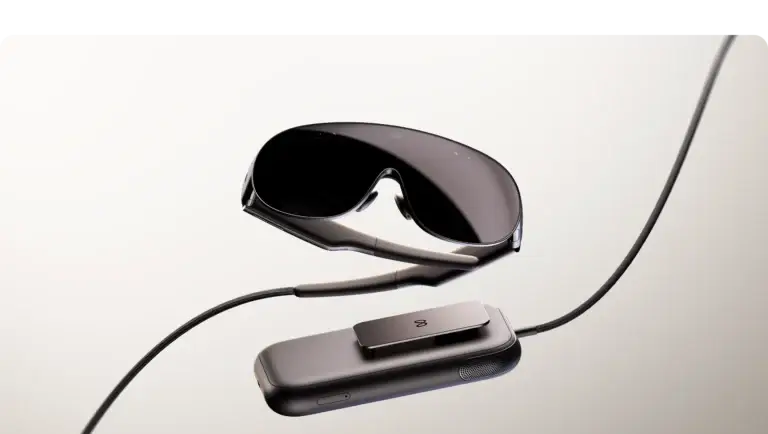
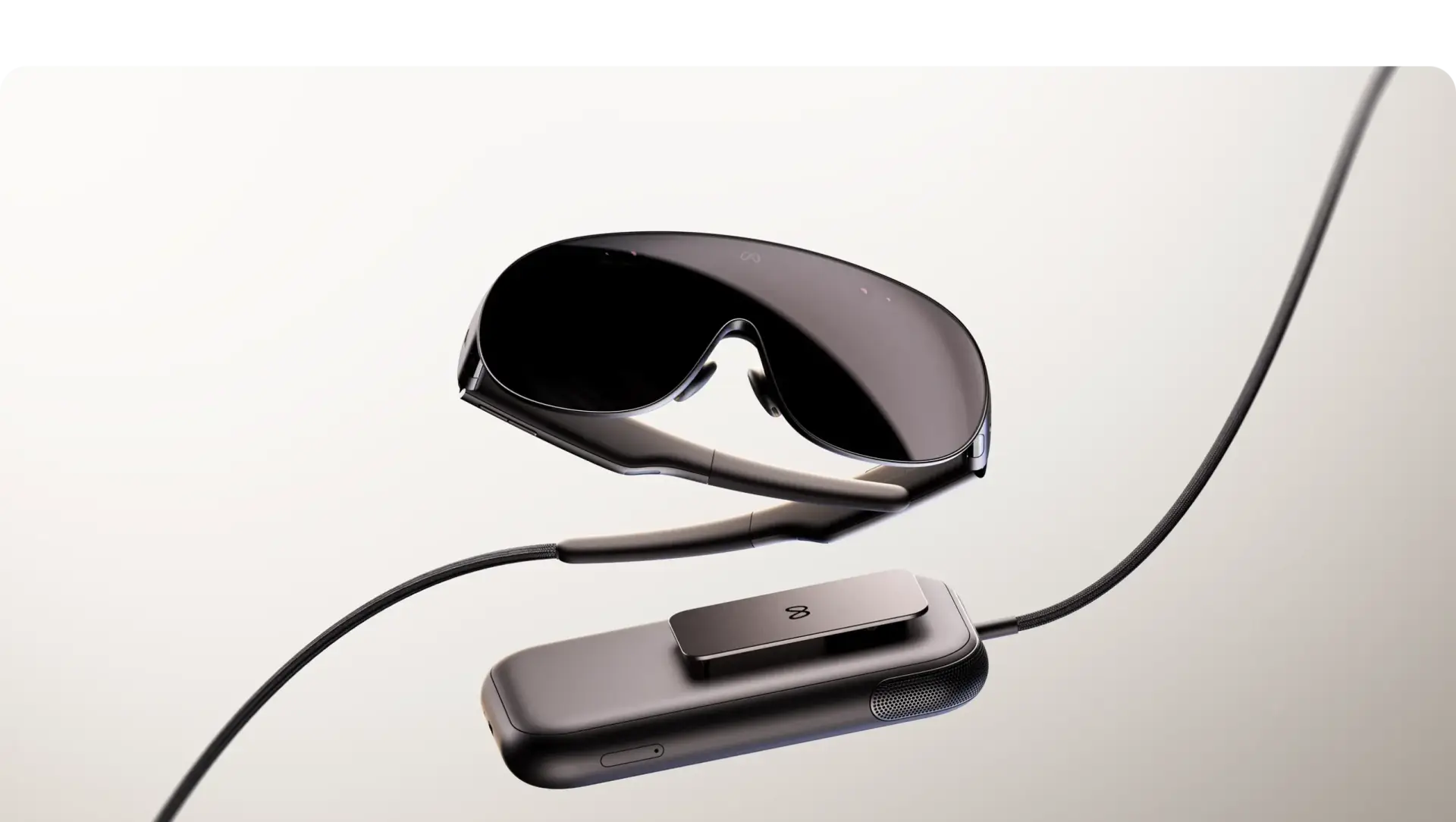
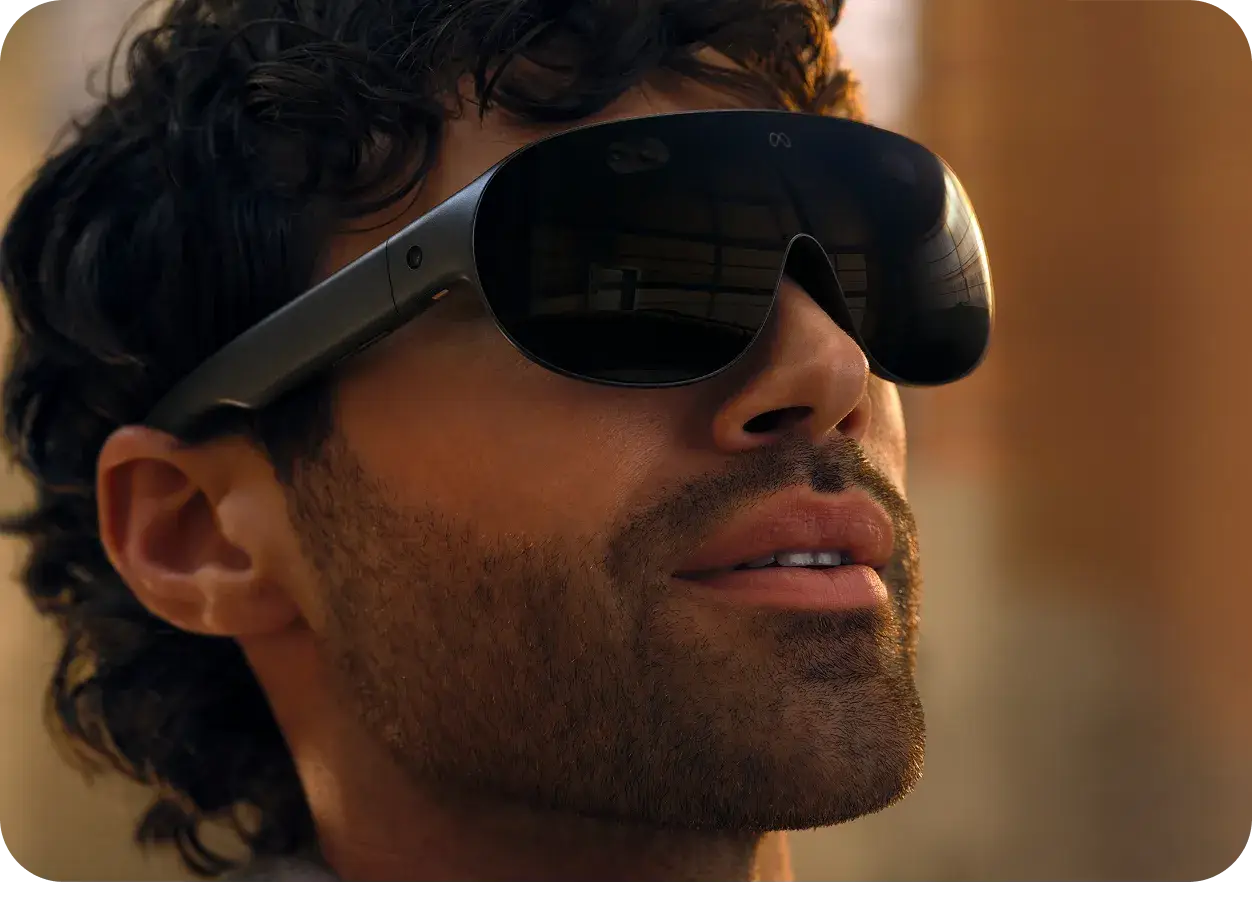
Featured image: official Meta VR Glasses and compute puck, credited to Meta. It illustrates the product being confused with Quest 4; it is not a Quest 4 photograph or render.
As of 3 October 2026, I could not verify an official retail announcement, specification sheet, price or release date for a headset named Meta Quest 4. Meta has announced Meta VR Glasses as a separate product. Rumours about the next gaming Quest remain useful leads, but they are not finished-product specifications.
My own VR life starts with Meta Quest: games, social spaces, creative tools and the people I meet inside them. That makes the next headset interesting to me, but I have not tested Quest 4. This article combines checked documentation, attributed reporting and my analysis of what those changes could mean for a player or creator.
What is confirmed—and what still is not?
Start with the product name. An announcement about a new Meta VR device does not automatically become a Quest 4 announcement. Meta’s developer documentation distinguishes the Quest line from the VR Glasses line. That distinction keeps the comparison useful. Read Meta’s device overview.
| Claim | Evidence status | What readers should take from it |
|---|---|---|
| “Quest 4 has been announced.” | Unverified | No named retail announcement found in the official material checked. |
| “The thin glasses pictured online are Quest 4.” | Misidentification | Official images now identify a separate product: Meta VR Glasses. |
| “Meta is working on future headsets.” | Public executive statements | Supports ongoing development; does not settle a retail name or specification. |
| “Griffin is the next gaming Quest.” | Reported codename | Attributed to firmware reporting; internal names can change. |
| “Quest 4 will arrive in late 2027.” | Reported earliest window | UploadVR’s July assessment, not Meta’s promised sale date. |
| “Quest 4 will have OLED, eye tracking or a particular chip.” | Unconfirmed for Quest 4 | Those details cannot be transferred from another headset. |
| “A pricier gaming successor is planned.” | Leaked-roadmap reporting | No verified Quest 4 retail price or bundle. |
Evidence: Meta’s 23 September announcement; UploadVR’s executive-interview coverage; UploadVR’s July roadmap report. “Unverified” means the checked material does not establish the claim; it does not prove a future device will never exist.
The announced device: Meta VR Glasses
Meta announced the glasses on 23 September 2026, with a planned spring 2027 release and a US$1,299.99 price. The roughly 100g figure describes the glasses worn on the face; computing and battery hardware sit in a tethered puck. Meta describes micro-OLED displays, compact pancake optics and up to three hours of media playback. These are announced manufacturer claims, not my independent measurements. Official announcement.
There is also a documentation discrepancy: the newsroom calls the processor Snapdragon Reality Elite, while the developer overview and comparison call it Snapdragon XR2 Gen 3. I have not established whether those names describe the same implementation. Neither confirms a Quest 4 processor. Developer overview · Developer comparison.
How the Quest 4 story changed
| Date | What appeared | How to read it now |
|---|---|---|
| 2 June 2025 | UploadVR reported a roadmap change: Pismo Low and High candidates cancelled; an ultralight puck device prioritised. | Cancellation of particular candidates does not establish the cancellation of every future Quest. |
| 10 February 2026 | UploadVR covered Bosworth’s interview with Alex Heath: two devices on the roadmap; Griffin cited as a reported gaming-headset codename. | The executive’s broad statement and the reporter’s product interpretation are different levels of evidence. |
| July 2026 | UploadVR covered renewed statements about multiple next-generation headsets. Its reported earliest traditional Quest window was late 2027. | An earliest estimate can move; it is not a guaranteed launch year. |
| 29 July 2026 | Road to VR described a leaked setup video for the thin puck-tethered device. | A development setup sequence can reveal form, without revealing final hardware or availability. |
| September 2026 | Reports examined Phoenix imagery found in firmware. | A software asset is stronger than an unattributed concept picture, but still needs product identification. |
| 23 September 2026 | Meta announced Meta VR Glasses. | Use the official product name and new announcement; older “not announced yet” articles are now historical. |
| 3 October 2026 | This article’s evidence check. | Quest 4 remains without a verified public retail specification in the sources checked. |
This is why two headlines can seem to disagree while discussing different moments—or different devices. Always compare the date, the named project and the kind of evidence. A blog that predicted a 2026 release before a roadmap change should not outweigh a later announcement or a dated correction.
Which images can we actually trust?
A convincing picture can make a rumour feel settled. Before deciding what it proves, ask where it came from. Is it a manufacturer product image, a software asset, a reconstruction drawn by someone who saw development hardware, or an artist’s idea? Those are different things.
| Image type | Example / original coverage | What it can establish |
|---|---|---|
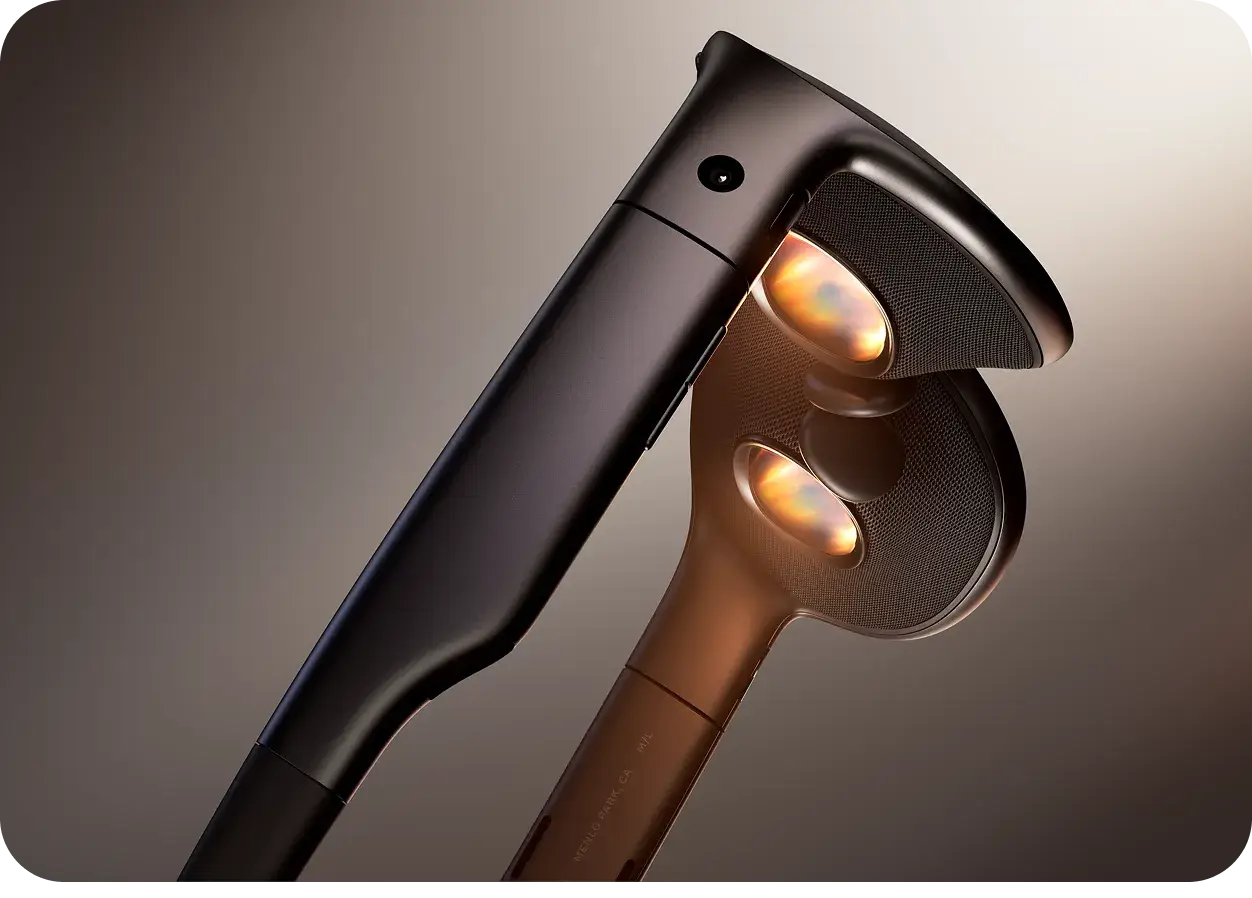
| Official product artwork | The Meta VR Glasses images shown here. | The appearance of the named announced device; not a Quest 4 specification. |
| Reconstruction / mock-up | Tom’s Guide: thin-headset mock-ups and compute-puck reporting. | A visual interpretation of reported development hardware, not an official retail render. |
| Development setup capture | Road to VR: leaked user-setup video and its source credits. | Possible design clues. The coverage notes a modified work-in-progress setup, limiting conclusions. |
| Firmware imagery | TechRadar: September Phoenix image discovery. | Images reportedly extracted from software. They need attribution and later official context. |
| Unattributed “Quest 4” picture | No original source or clear label. | Too little evidence to identify the device or confirm its features. |
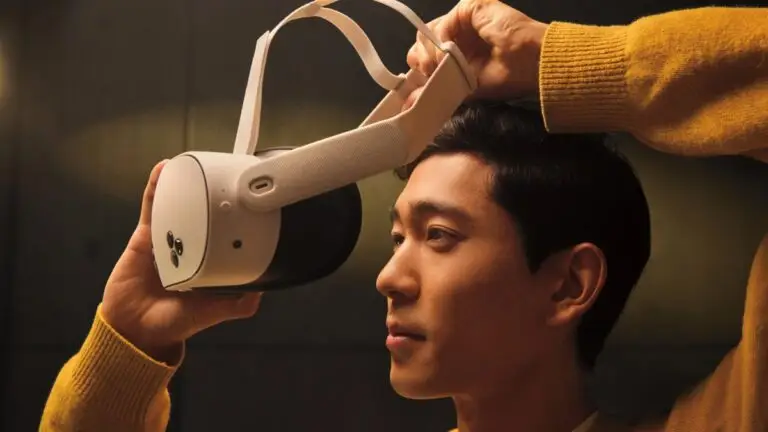
The original reporting links above let you inspect the circulating leak and mock-up galleries with their credits and context. I have used attributed official artwork and existing Quest product photographs here rather than relabelling someone’s reconstruction as a confirmed Quest 4. There is no verified Quest 4 image gallery to present as official at this point.
Compare the headsets we know with the one we do not
The empty cells are part of the answer. Adding plausible-looking numbers would create a comparison that feels complete while hiding the most important uncertainty. Released headsets have documented hardware; the rumoured Quest 4 does not yet have an equivalent public sheet.
| Model | Processor / RAM | Resolution per eye | Optics / mixed reality |
|---|---|---|---|
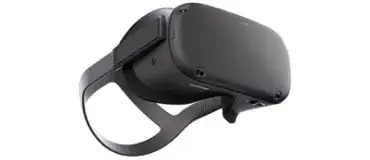
| Oculus Quest (2019) | Snapdragon 835 / 4GB | 1440 × 1600 | Fresnel; monochrome passthrough |
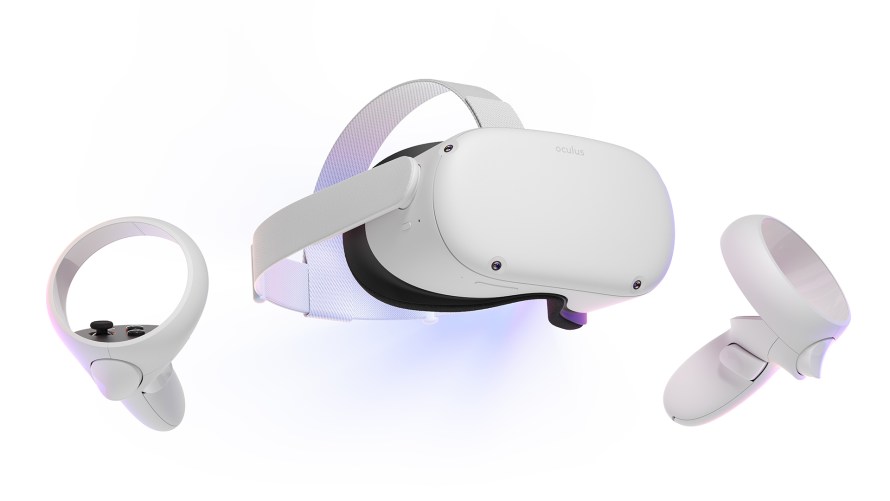
| Quest 2 | Snapdragon XR2 / 6GB | 1832 × 1920 | Fresnel; monochrome passthrough |
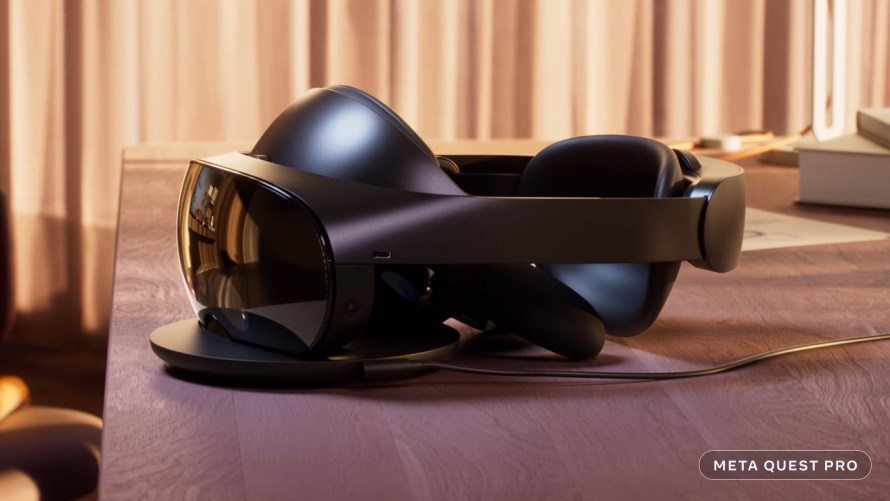
| Quest Pro | Snapdragon XR2+ Gen 1 / 12GB | 1800 × 1920 | Pancake; colour passthrough; eye/face tracking |
| Quest 3 | Snapdragon XR2 Gen 2 / 8GB | 2064 × 2208 | Pancake; colour passthrough; depth sensor |
| Quest 3S | Snapdragon XR2 Gen 2 / 8GB | 1832 × 1920 | Fresnel; colour passthrough |
| Quest 4 (rumoured) | Not confirmed | Not confirmed | Not confirmed |
Sources: Original Quest hardware details, Quest 2 launch details, Quest Pro announcement, Quest 3 specifications, Quest 3S specifications. Additional legacy hardware reference: Meta’s published Quest comparison. These are hardware figures, not measured game performance.
Display pixels per eye: a historical baseline
The chart shows why “a newer headset” is not a single kind of improvement. Quest 3S and Quest 2 share a per-eye pixel count, while their processing platforms and mixed-reality capabilities differ. Quest Pro’s role also cannot be reduced to pixel count: its specialist tracking features need their own software context.
Quest 3, Quest 3S and the announced glasses
| Feature | Quest 3 | Quest 3S | Meta VR Glasses — announced |
|---|---|---|---|
| Arrangement | All-in-one | All-in-one | Glasses + tethered puck |
| Display / per-eye resolution | LCD / 2064 × 2208 | LCD / 1832 × 1920 | micro-OLED / 2412 × 2288 |
| RAM | 8GB | 8GB | 12GB |
| Horizontal field of view | 110° | 96° | 70° |
| Primary interaction | Touch Plus controllers | Touch Plus controllers | Eyes / hands; Touch Plus separately |
| Position in this article | Available comparison model | Available comparison model | Future announced product; not Quest 4 |
Figures: Meta developer device comparison, updated 30 September 2026. All glasses figures are manufacturer-published pre-release details. Chip naming discrepancy is explained above.
Horizontal field of view: context for immersion
A sharper screen and a wider view answer different questions. A cinema screen or text panel can benefit from clarity concentrated in a smaller view. A fast game can make the amount of the world visible around you especially noticeable. A fair comparison asks which experience you spend time in, rather than declaring one number the winner.
Explore each previous model
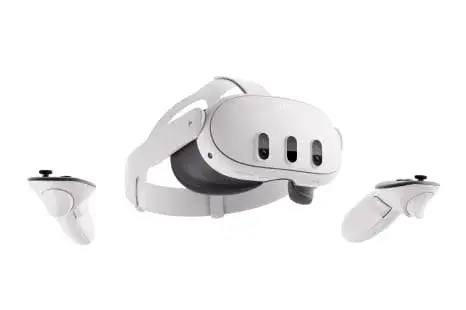
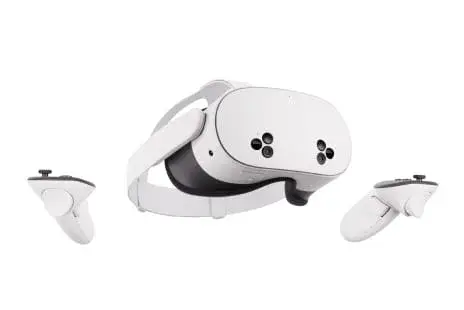
What would make Quest 4 a meaningful upgrade?
The following is my analysis and a list of questions for a future announcement. These are not predicted specifications. For a VR creator, an upgrade should improve an actual session: the game, the recording, the shared room or the creative tool.
🎮 Performance you can feel
A processor name is only the beginning. I would want evidence from demanding native games: stable frame delivery, fewer interruptions in crowded scenes, and useful developer support. A theoretical graphics percentage does not establish how an existing application behaves.
There is also a difference between display refresh rate and the frames a game actually delivers. Any future claim of “twice as fast” needs a defined workload, settings and comparison model. Without those, it tells a reader very little about the session they want to play.
👓 Clarity, fit and the view around you
For reading, editing and creative work, I would examine text across the lens, not just at the centre. For movement-heavy gaming, I would examine the field of view, stability on the face and the amount of adjustment needed during a session. Those priorities can pull in different directions.
A lighter face unit can be appealing, but any separate battery, cable or computer still belongs in the setup. Compare face weight and complete system weight separately. Comfort also needs real people, different head shapes and long sessions; it cannot be established from a press render.
🖐️ Tracking that suits the application
In a social world, expression and gestures can matter as much as visual detail. In an active game, controller coverage, physical buttons and a dependable grip may matter more. Eye tracking, hand tracking and facial-expression tracking are separate capabilities; the presence of one does not establish all three.
I would check the exact apps I use before treating a new interaction system as an upgrade. Can I still join the same rooms? Can I use the controls the game requires? Does my avatar show the expressions I expect? An impressive system demonstration does not answer every application-specific question.
🎥 Streaming, recording and shared experiences
My interest also includes what people outside the headset can see. A clearer private view is useful, but I would want to know how recording, casting, microphone audio and a shared watch party work in practice. Test the complete workflow, including the app and network, rather than assuming a headset upgrade fixes every bottleneck.
Battery claims need the same care. A media-playback estimate should not be read as a guarantee for a demanding game with recording running. A three-hour event needs realistic power planning, comfort breaks and a way to rejoin the room if something interrupts the session.
| Area | Evidence I would want | Why it matters |
|---|---|---|
| Native games | Published hardware plus independent app testing | Whether my actual games improve. |
| Optics | Resolution, lens design, field of view and practical viewing tests | Readable interfaces and comfortable immersion. |
| Tracking | Specific supported inputs and application demonstrations | Controllers, creative tools and avatar expression. |
| Library | Publisher compatibility statements and supported-device listings | Access to existing purchases and communities. |
| Creator workflow | Recording, casting, audio and connection tests | Reliable content creation and shared sessions. |
| Ownership | Battery conditions, included items, repair/support policy | The cost of a complete usable setup. |
Release date and price: how much can we say?
UploadVR’s July 2026 reporting places a traditional gaming successor in late 2027 at the earliest. That is a reported planning horizon. It is not an exact release date, a Netherlands shop listing or a promise from Meta. The same coverage discusses a less-subsidised future gaming device, but gives no confirmed Quest 4 checkout price. Read the original roadmap coverage.
| Figure | Meaning |
|---|---|
| Original Quest: US$399 | Entry launch price in 2019. |
| Quest 2: US$299 | Entry launch price in 2020. |
| Quest Pro: US$1,499.99 | Launch price in 2022. |
| Quest 3: US$499.99 | 128GB launch price in 2023. |
| Quest 3S: US$299.99 | 128GB launch price in 2024. |
| Meta VR Glasses: US$1,299.99 | Announced price for a separate spring 2027 product. |
| Quest 4: unknown | No verified retail price; do not substitute any figure above. |
Historical prices: Quest launch, Quest 2 launch, Quest Pro launch, Quest 3 launch, Quest 3S launch. Glasses: Meta’s announcement. These are US-dollar references from different years and configurations, not current offers or inflation-adjusted comparisons.
For current purchases, use the actual local offer and complete bundle. The US and Netherlands can differ in taxes, warranty, promotions and currency. A future international price should come from a regional announcement or authorised listing, rather than a currency conversion presented as an official price.
Should an existing Quest owner wait?
Start with what your headset cannot currently do. If the answer is “nothing that stops me enjoying it”, there is little urgency to decide based on an unannounced product. If a particular application no longer supports your device, your decision has a concrete deadline and an available-model comparison.
Write down your essential apps, the people you play with and the problem an upgrade must solve. Then keep the unknowns visible. Someone prioritising virtual screens and travel might evaluate the announced glasses differently from someone prioritising active room-scale gaming. Neither needs an invented Quest 4 specification to make that distinction.
Where other platforms enter the discussion
The next Quest will also be judged against the experiences outside Meta’s platform. This is a comparison of approaches, not a prediction that Quest 4 will beat them. A headset can offer attractive hardware and still be a poor match for your purchased library or the community you want to join.
| Platform | Relevant comparison | Important limit |
|---|---|---|
| Valve Steam Frame | Valve documents a streaming-first standalone SteamOS headset. | PC streaming and on-device compatibility are different questions; consult the game’s supported route. |
| PICO 4 Ultra | PICO’s standalone headset specifications. | Check the regional store and exact app; Meta purchases do not automatically transfer. |
| PlayStation VR2 | Sony’s console VR specifications. | PS5-based gaming belongs in a complete console-and-headset cost comparison. |
| Apple Vision Pro | Apple’s hardware documentation. | Spatial computing and media use a different app ecosystem from native Quest gaming. |
For my site, the practical anchor remains Meta Quest because it is the headset platform I own. A competitor is useful context, especially for clarity, input or streaming design, but I would not describe my personal experience with hardware I have not used. The app and the people you want to meet belong beside the hardware figures.
Common questions
Is Quest 4 the same as Meta VR Glasses?
The official materials checked treat Meta VR Glasses as a separate product line. Do not relabel its photos, price or hardware table as Quest 4.
Are the leaked pictures fake?
Some are explicitly mock-ups; others are reported firmware or development captures. Their origin and product identity matter. A real asset can still be incorrectly labelled, and a reconstruction can be useful without being an official photo.
Will Quest 4 support my existing games?
There is no verified Quest 4 compatibility commitment in the material checked. Wait for Meta and the individual publisher to specify supported devices and features.
Will there be a Quest 4S?
I could not verify a retail announcement for that name. Reports about earlier high/low candidates do not confirm a final two-model lineup.
Can we compare Quest 4 performance yet?
No credible benchmark comparison can be made from unknown hardware. This article compares documented earlier models and explains what should be tested when a real device is available.
What would count as confirmation?
A dated official product announcement, manufacturer specifications and regional sales details. Independent testing would then help assess performance, comfort and practical limitations.
Will this article change when Meta announces more?
The evidence-check date above defines this edition. Confirmed future details should replace the unknowns with a dated update and source link; rumour history should remain identified as history.
Sources, other coverage and the next read
The manufacturer pages establish announced product details. Original reporting establishes what was reported and when; it does not convert a leak into a promise. Articles repeating the same leak should not be counted as multiple independent confirmations.
- Meta Newsroom: Meta VR Glasses announcement — 23 September 2026
- Meta developer overview: product identity, input and official imagery
- Meta developer comparison: hardware table — updated 30 September 2026
- UploadVR: June 2025 roadmap reporting
- UploadVR: February 2026 executive-interview coverage
- UploadVR: July 2026 next-generation headset reporting
- Road to VR: development setup imagery, credits and caveats
- Tom’s Guide: mock-up / reconstruction coverage
- TechRadar: Phoenix firmware-image reporting
- UploadVR: pre-announcement Phoenix reporting, useful as historical context
From the headlines to your own headset
Read Meta Quest explained: history, models & prices and Your first days with Meta Quest. Explore my VR app library to connect the hardware discussion with actual experiences.
What would make you upgrade: clearer text, longer sessions, better games or stronger creator tools? Share your experience in the comments. For a longer contribution or collaboration, use Create with me.